Ceiling Fan Wiring Explained: Common Mistakes Homeowners Make
If your fan hums, the light flickers, or the breaker trips when you pull the chain, the wiring is often the culprit. Ceiling fan wiring issues look simple from below, but the real problem is usually hiding in the box, the wire connections, or the terminations above the canopy. Orlando homeowners run fans for long seasons, so small wiring mistakes show up quickly and tend to get worse with time.
This guide breaks down the most common ceiling fan wiring mistakes and how to identify risk before a minor annoyance becomes a safety concern.
Know What the Circuit Is Supposed to Do First
A fan circuit usually has to manage two functions: the fan motor and the light kit. Some homes use one wall switch for both. Others use separate controls or a remote receiver. When the original wiring intent is unclear, guesswork leads to crossed wires and unstable operation.
Before changing any connections, identify the following:
- The constant hot feed (always live from the panel)
- The switched hot wire (controlled by the wall switch)
- The neutral return path
- The ground wire path
Misidentifying any one of these — especially confusing a switched hot wire with a constant feed — can create flicker, non-working switches, or overheating connections that worsen over months of use.
Mistake 1: Mounting to a Box That Is Not Fan-Rated
A standard light box is not designed to handle fan vibration and the sustained weight of a motor assembly. Over time, that mismatch loosens mounting hardware and stresses wire connections. Symptoms include wobble, clicking sounds, or intermittent operation when the fan speed increases.
Why a Fan-Rated Box Matters
A fan-rated box is built with stronger mounting points and is tested for dynamic loads — not just static weight. Without a fan-rated box, even perfect wiring can fail mechanically. If you are replacing a light fixture with a ceiling fan, confirming the box rating is the very first step.
Mistake 2: Mixing Switched and Always-On Hot Wires
When the switched hot wire and the constant feed are crossed, homeowners see confusing behavior: the fan works but the light does not, the light works but the fan never turns off, or the wall switch controls the wrong function. This is especially common after replacing an old fan with a remote-control model, where extra wires change the expected layout.
Correct wire mapping is not optional. It determines how every switch and control behaves, and it prevents accidentally working on live wires during future maintenance. If the switched hot wire is not clearly identified and separated, the entire control scheme becomes unreliable.
Mistake 3: Loose Neutral Connections Causing Intermittent Flicker
A loose neutral is one of the most frustrating problems to diagnose because the symptoms come and go. You may see random light flicker or motor instability that appears only at certain speeds. The fan might work fine for days, then fail during longer run times in hot weather when expansion loosens an already marginal connection.
Warning Signs of a Loose Neutral
- Flicker when the fan speed changes
- Brief light dimming when the motor starts up
- A warm canopy area after extended use
A loose neutral should be corrected quickly. Heat builds at weak terminations over time, and what starts as a flicker can progress to a melted connector or damaged wiring insulation. Do not dismiss intermittent flicker as a bulb problem without first checking the neutral connection.
Mistake 4: Incomplete Grounding at the Bracket and Box
Ground continuity protects you when faults occur. A missing or loose ground wire at the fan bracket or ceiling box increases shock risk and can interfere with protective devices like GFCI or AFCI breakers. In older Orlando homes, grounding quality often varies by room due to previous upgrades or partial rewiring.
If the grounding path is uncertain, this is a strong reason to stop any DIY work and involve a licensed electrician. Grounding is not something to leave to chance, especially on a fixture you or your family will use daily.
Mistake 5: Remote Receiver Wiring Errors
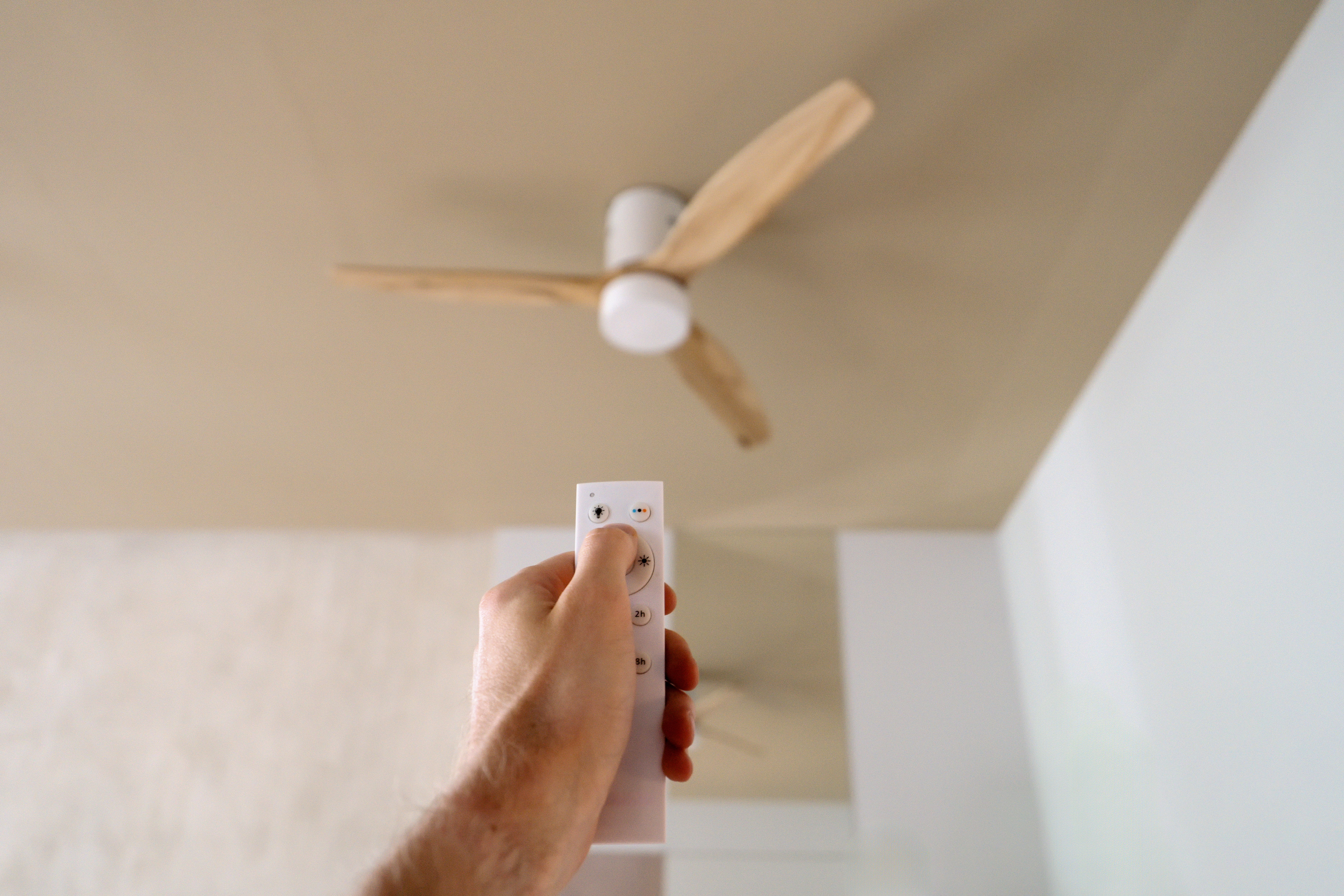
Remote receivers add convenience but also add complexity inside an already tight canopy space. Incorrect line and load connections at the receiver can produce delayed startup, random shutoff, or completely dead controls. Some homeowners bypass a failed receiver without resolving the underlying wiring mismatch, which creates inconsistent behavior at both the wall switch and the remote.
Receiver troubleshooting should include clear wire identification and enough space in the enclosure so wires are not pinched or compressed under the canopy. Rushed installs in cramped boxes are a common source of these problems.
Mistake 6: Ignoring Heat Buildup During Extended Use
Fans in Orlando often run for eight or more hours at a stretch. A ceiling fan wiring setup that seems acceptable during a short test can overheat during overnight operation. That is why post-installation checks under normal runtime matter just as much as the initial install.
If you detect a burning smell, unusual hum, or repeated nuisance trips, treat it as a wiring quality issue until proven otherwise. These are not quirks to live with — they are early warnings.
Safety Checklist Before and After Fan Work
- De-energize the circuit and verify power is off at the box.
- Confirm the box is fan-rated and structurally supported.
- Match wires by function, not by color assumptions alone.
- Tighten all approved connectors correctly.
- Test the fan and light at each control mode.
- Recheck connections after extended runtime.
This process is slower than quick swaps, but it prevents most recurring fan wiring failures.

When Fan Wiring Should Leave DIY Territory
Call a licensed electrician if wire identification is unclear, if the box is not fan-rated, if grounding is uncertain, or if symptoms persist after a clean rewire. Also call when previous work left mixed wiring that is hard to trace — this is more common than most homeowners expect, especially in homes that have changed hands multiple times.
Reliable fan operation depends on sound electrical fundamentals, not just matching wire colors quickly.
What This Means for Orlando Homeowners
Ceiling fan wiring problems usually come from predictable mistakes: the wrong box type, crossed hot wires, a loose neutral, poor grounding, or receiver errors. In a climate where fans run often, those mistakes surface faster than they would in cooler regions. A careful diagnostic approach and acting early on warning signs keeps your equipment dependable and your home safe.
Ceiling Fan Wiring Questions
Why does the fan light flicker only at certain speeds?
Speed changes alter motor draw and can expose a loose neutral or control wiring problem that is not obvious at a single setting. If flicker only appears at specific speeds, the neutral connection and switch wiring should both be inspected.
Can I reuse the old ceiling box from a light fixture?
Only if it is a fan-rated box and securely supported. Many light-only boxes are not suitable for the vibration and weight of a ceiling fan.
Is a remote kit always easier than dual wall switches?
Not always. Remote kits simplify day-to-day control but add receiver wiring complexity that must be installed correctly. If the switched hot wire and neutral are not clearly identified beforehand, a remote install can introduce more problems than it solves.

