What's the Real Difference Between a Whole House Surge Protector and a Power Strip?
After a thunderstorm, many homeowners ask the same question: "I already use power strips, so why would I need anything else?" The confusion is understandable because both products mention surge protection on the box. The real difference comes down to where they work and what kind of surge energy they are built to handle.
In Orlando, where lightning activity is a regular part of life, understanding this difference helps prevent avoidable damage to electronics and appliances.
Quick comparison before we dig in
A power strip protects only the devices plugged into that specific strip. A whole-house surge protector works at the main electrical entry point, covering the entire system. They are not interchangeable tools, and the best protection usually comes from using both together in layers.
That summary is simple, but the details matter when you are making practical decisions about your home.
What a standard power strip does well
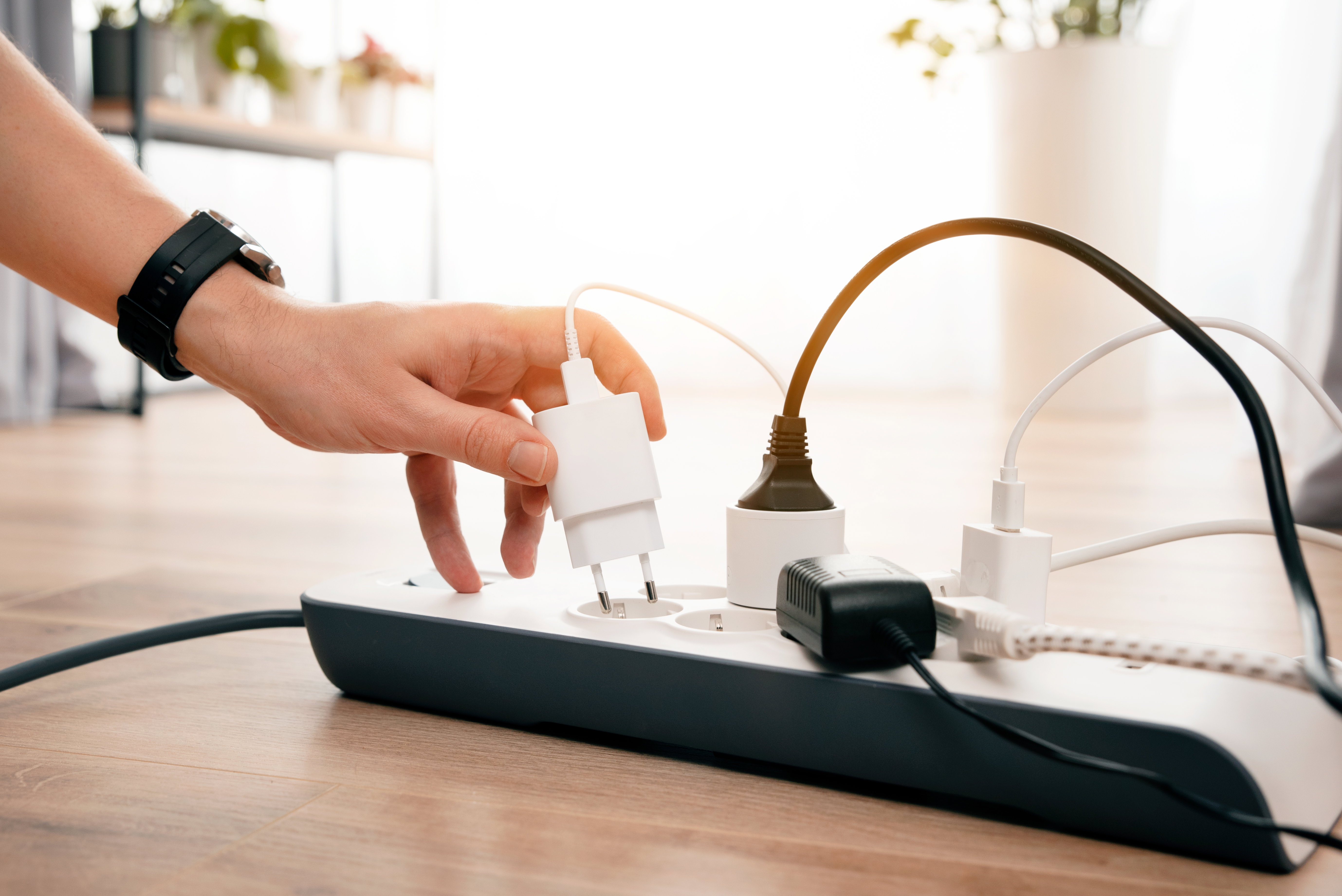
A quality power strip can reduce small transient voltage spikes right at the point of use, providing localized point of use protection for sensitive electronics. This makes it useful for TVs, desktop computers, office equipment, and network gear where you want a filter sitting right next to the device.
Most decent strips also include features like spaced outlets, USB ports, and indicator lights that tell you whether the surge protection component is still functioning. These are genuinely helpful features for everyday use.
What a power strip does not do:
It does not protect hardwired appliances like your HVAC system or water heater. It does not cover circuits where no strip is attached. And it cannot absorb a very large surge event on its own. The internal components that divert surge energy have a limited capacity, and once that capacity is spent, the strip may still supply power without offering any protection at all.
Power strips are useful, but they are limited by both their location and their energy-handling capacity.
What a whole-house surge protector adds
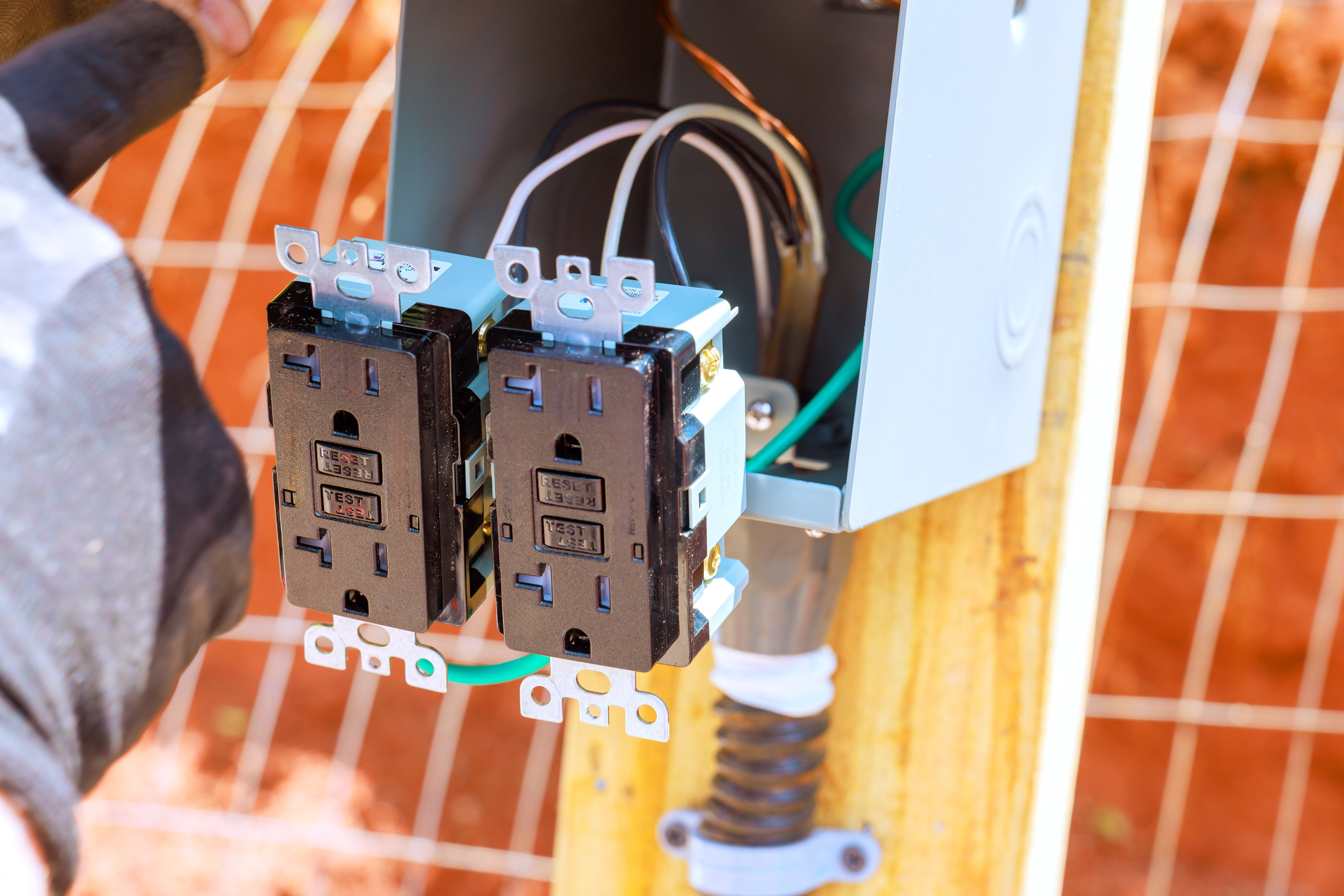
A whole-house surge protector, sometimes called a panel surge device, is installed at or near your main electrical panel. Its job is to divert large surge energy away from your branch circuits before that energy reaches individual rooms and outlets. It does not replace point-of-use protection entirely, but it significantly lowers the surge load that reaches the rest of your home.
This matters especially for equipment that is hardwired or not easily connected through a strip:
HVAC systems, kitchen appliances like refrigerators and dishwashers, smart home controllers and hubs, and garage door openers and other motorized systems.
A whole-house protector acts as the first line of defense across your entire electrical system. Without it, every appliance and device in the home is exposed to the full force of whatever comes through the service line.
Why choosing one or the other is usually the wrong approach
Framing whole house surge protector vs power strip as an either-or decision misses how real surge events actually work. Surges can enter through multiple paths, including the main power line, cable connections, and phone lines. They affect both hardwired and plug-in equipment.
A panel-level device reduces the incoming surge energy before it spreads. Point-of-use strips then clean up whatever residual energy makes it through to sensitive devices at the endpoint. Each layer handles a different part of the problem.
Layered protection is almost always more resilient than depending on a single product category alone.
This approach is often referred to as layered surge defense, where protection is applied at multiple levels rather than relying on a single device.
Orlando storm patterns raise the practical stakes
Central Florida sees some of the highest lightning density in the entire United States. On top of direct strikes, storms regularly cause power fluctuations across the grid that ripple into homes through utility lines.
Even if your home is never directly hit, nearby strikes and grid-level disturbances can produce voltage spikes that stress your electronics repeatedly over time. That repeated stress may not destroy a device overnight. Instead, it quietly shortens the lifespan of control boards, capacitors, and processors, leading to random failures weeks or months after the storm that caused the damage.
This is why surge strategy should be treated as ongoing risk reduction rather than a one-time emergency response. The goal is not just surviving the big strike. It is reducing the cumulative wear that storms place on everything connected to your electrical system.
Signs your current setup may not be enough
Watch for these clues:
Repeated loss of small electronics after storm seasons. Unexplained modem or router failures that happen more than once. Smart appliance control boards failing well before their expected lifespan. Strip indicator lights showing that the protection component has burned out.
If any of these signs keep showing up, relying solely on point-of-use strips may not be enough for your home.
Building practical layered protection
A balanced approach often includes:
Panel-level surge protection to cover the entire electrical system. Quality point-of-use strips placed at sensitive devices like entertainment centers, home offices, and networking equipment. Replacing old strips whose indicators show expired protection. Periodic review of your setup after major storm seasons to make sure everything is still functioning as intended.
This is not about overbuying gadgets. It is about placing the right protection at the right level so nothing is left exposed.
When surge protection needs professional work
If you are considering whole-home surge protection, the installation should involve a licensed electrician. Work around the main panel is not a DIY project, and getting it wrong can create safety hazards or void equipment warranties.
Professional input is also valuable when recurring storm-related equipment failures suggest a broader vulnerability in your electrical system. A proper setup should match your home's specific configuration and risk exposure, not follow a generic one-size-fits-all recommendation.
Practical protection summary
Power strips and whole-home surge devices serve different roles at different points in your electrical system. In storm-prone Orlando, relying on just one layer leaves gaps that storms will eventually find. Treat surge defense as a layered system: broad protection at the service point, targeted protection at your most sensitive devices, and regular review after high-storm periods to confirm everything is still working.
Common Questions
If I have many power strips, do I still need a whole-home device?
Often yes. Strips do not protect hardwired loads and cannot replace the panel-level diversion that a whole-house unit provides. No matter how many strips you use, your HVAC and major appliances remain unprotected.
Does a whole-house protector make power strips unnecessary?
No. Sensitive electronics still benefit from point-of-use protection as a second layer. The panel device reduces the surge, but a strip at the endpoint adds an extra margin of safety for delicate components.
How do I know if a power strip is no longer protecting?
Check the indicator light on the strip. Many strips lose their surge protection component over time while still supplying power normally. If the protection light is off or has changed color, the strip is functioning only as a basic extension cord and should be replaced.

